The Importance of Tonewoods in Guitar Crafting
Understanding Guitar Tonewoods can help you recognize how different woods influence a guitar’s sound, feel, and appearance. Because each wood has distinct characteristics, learning the differences can make choosing your next guitar much easier.

Guitar Tonewoods at a Glance
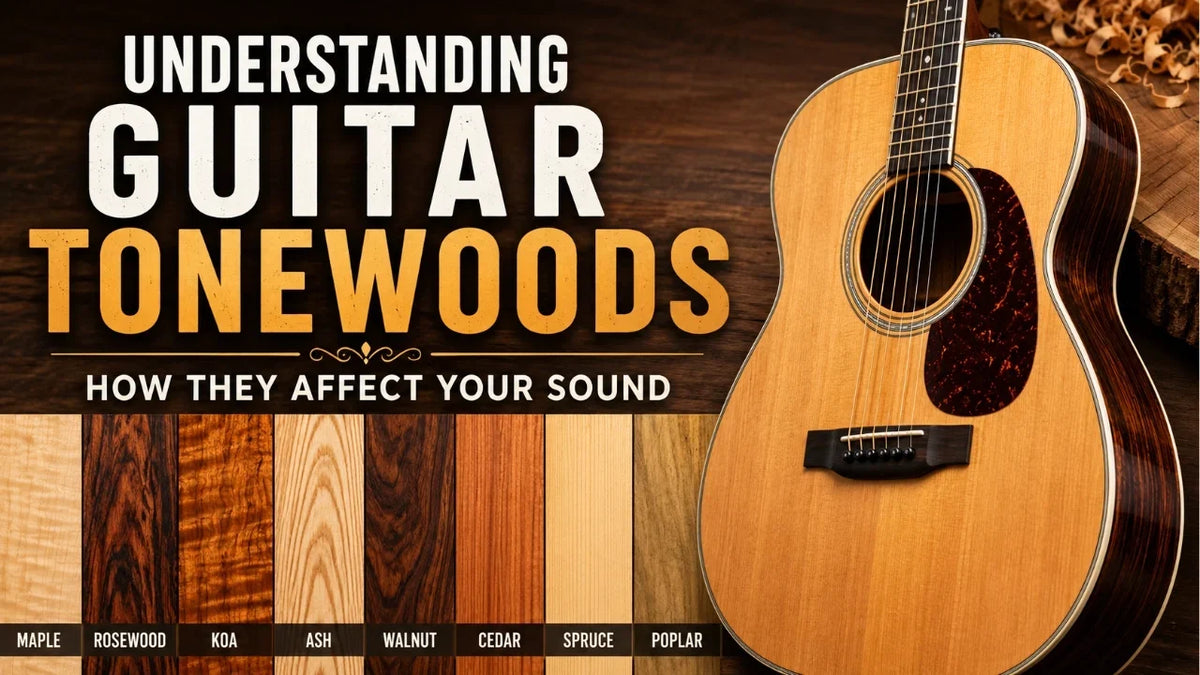
Before exploring each wood in detail, it helps to know the general sound characteristics associated with some of the most popular guitar tonewoods:
- Maple: Bright, clear, articulate, and focused
- Rosewood: Warm, rich, resonant, and full-bodied
- Koa: Warm and balanced with a strong midrange
- Ash: Punchy, bright, and dynamic
- Walnut: Balanced, clear, and versatile
- Cedar: Warm, mellow, and highly responsive
- Spruce: Clear, powerful, and dynamically responsive
- Poplar: Smooth, mellow, and even
Maple: Bright and Clear

Maple is known for its bright, articulate tone and excellent sustain. Additionally, it produces clear highs and a tight low end. Its dense grain also provides stability and durability, which makes maple a popular choice for guitar necks, bodies, and fingerboards.
Rosewood: Rich and Resonant

Indian rosewood offers a warm, full-bodied tone with deep bass and rich overtones. Therefore, it has long been a popular choice for acoustic guitar backs and sides as well as fingerboards.
Brazilian rosewood shares many of these characteristics. However, it is often prized for its pronounced overtones, clarity, and sustain. Because it is much rarer, you will generally find it on higher-end or vintage instruments.
Koa: Warmth with Midrange Focus

Koa, which is native to Hawaii, blends warmth and brightness with a strong midrange presence. As a result, it can work well for both strumming and fingerpicking while maintaining plenty of clarity.
Additionally, koa stands out visually. Its golden coloring and dramatic grain patterns can make each instrument look unique, giving players a combination of distinctive tone and striking appearance.
Ash: Punchy and Dynamic

Ash is known for a punchy and dynamic sound, particularly through the midrange. Moreover, it can provide bright highs along with a strong bass response, making it a popular wood for electric guitar bodies.
Depending on the variety and individual piece of wood, ash can also keep an instrument relatively comfortable to play. Therefore, it has remained a familiar choice among many electric guitar builders.
Walnut: Balanced and Versatile

Walnut offers a balanced sound that often falls between the warmth of mahogany and the brightness of maple. It provides a strong midrange, clear highs, and a focused low end.
Furthermore, walnut has a naturally dark and elegant appearance. Consequently, it can appeal to players looking for both tonal versatility and distinctive visual character.
Cedar: Warm and Mellow

Cedar is prized for its warm, mellow tone and quick response. Because it responds easily to a lighter touch, it is especially popular among fingerstyle and classical guitar players.
Compared with stiffer top woods, cedar can produce a rich and complex sound without requiring aggressive playing. Therefore, players who prefer a softer touch may particularly enjoy its responsiveness.
Spruce: Versatile and Responsive

Spruce is one of the most widely used acoustic guitar top woods because of its versatility and dynamic range. It delivers a clear sound with strong projection while responding well to different playing styles.
For example, spruce can handle gentle fingerpicking while still providing enough headroom for powerful strumming. As a result, it remains a dependable choice for players who want one guitar to cover several musical styles.
Poplar: Smooth and Mellow

Poplar is a relatively soft and lightweight wood that produces a smooth, balanced sound. Rather than emphasizing extreme highs or lows, it tends to offer an even response across the tonal spectrum.
Additionally, poplar is affordable and readily available. Because of this, manufacturers frequently use it for electric guitar bodies, particularly on instruments designed to deliver good performance at an accessible price.
Choosing the Right Tonewood
Selecting the right tonewood ultimately depends on your preferred sound and playing style. For instance, maple may appeal to players seeking clarity, while cedar can suit those who prefer warmth and responsiveness.

However, tonewood is only one part of a guitar’s overall voice. Body shape, construction, strings, pickups, hardware, and playing technique can also affect what you hear. Therefore, it is best to consider the entire instrument rather than choosing a guitar based on wood alone.
Finding the Sound That Fits You
Understanding how guitar tonewoods differ gives you another useful tool when comparing instruments. Whether you prefer the brightness of maple, the richness of rosewood, or the warmth of cedar, knowing what each wood can contribute can help you find a guitar that inspires you to keep playing.
See Available Ukuleles at Terry Carter Music Store
Master the Ukulele at Uke Like The Pros
Master the Guitar at Rock Like The Pros