Everything You Need to Start Playing
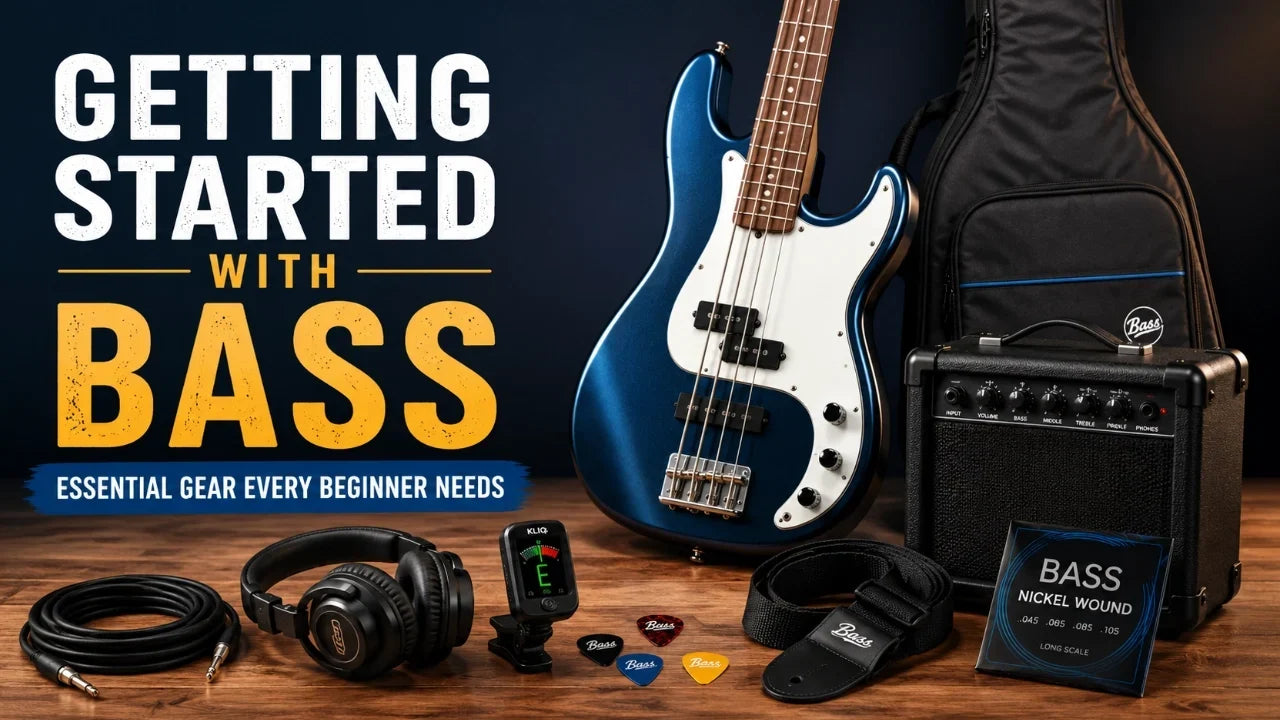
Essential bass gear for beginners doesn’t need to be complicated or expensive. Once you have your bass, a handful of accessories will help you practice comfortably, protect your instrument, and get the sound you expect every time you play.
Although it can be tempting to buy every accessory you see, beginners are better off starting with the basics. From a dependable amp to a simple tuner, each piece of gear should make playing easier rather than adding unnecessary clutter.

Start With a Bass Amplifier
If you have an electric bass, an amplifier is one of the first things you’ll need. Unlike an acoustic instrument, an electric bass relies on amplification to produce the full, deep sound it was designed to deliver.

Fortunately, beginners usually don’t need a huge amplifier. A compact practice amp can provide plenty of volume for learning at home while taking up very little space.
Additionally, look for an amp with a headphone jack. This simple feature lets you practice quietly when other people are nearby, making it especially useful for apartments, shared homes, or late-night sessions.
Choose the Right Instrument Cable
An instrument cable connects your electric bass to your amplifier. It may seem like a minor accessory, but you won’t get very far without one.

More importantly, choose a cable that gives you enough room to sit or stand comfortably while playing. A little extra length can prevent you from feeling restricted during practice.
At the same time, you don’t need an extremely long cable for a small room. A dependable cable of a practical length will usually be all a beginner needs.
Keep Practice Quiet With Headphones
Headphones are one of the most useful accessories for anyone practicing bass at home. Because bass frequencies can travel through walls and floors, quiet practice can make everyone around you much happier.

Most importantly, make sure your amplifier has a compatible headphone output. Once connected, you can hear your bass clearly without using the amp’s speaker.
Additionally, headphones can help you notice small details in your playing. Buzzing strings, uneven notes, and unwanted noise often become much easier to hear.
Stay in Tune With a Bass Tuner
Playing an out-of-tune bass can make even the right notes sound wrong. Therefore, a tuner should be part of your setup from the beginning.

Many electronic tuners can connect directly to an electric bass, making them accurate and easy to use. Fortunately, plenty of reliable options are inexpensive.
Before every practice session, take a few moments to check your tuning. Over time, this habit will also help develop your ear for how properly tuned bass strings should sound.
Keep a Few Picks Nearby
While many bass players use their fingers, picks are another useful way to play. They create a different attack and can produce a sharper, more defined sound.

For beginners, medium picks can provide a comfortable balance between flexibility and control. However, picks are inexpensive, so experimenting with several thicknesses can help you discover what feels best.
Even if you eventually prefer fingerstyle playing, keeping a few picks in your case gives you another option when experimenting with different sounds and musical styles.
Find a Comfortable Bass Strap
A bass strap keeps the instrument secure while you play. Because bass guitars are often larger and heavier than standard guitars, a comfortable strap can make a noticeable difference.

Most straps are adjustable, so take time to find a position that feels natural. Your bass should sit at a height that allows you to reach the strings and fretboard without excessive stretching.
Additionally, a wider or lightly padded strap may feel more comfortable during longer practice sessions, especially with a heavier instrument.
Always Have Extra Bass Strings
Bass strings tend to last quite a while, but eventually they need to be replaced. Therefore, keeping an extra set nearby can prevent a broken or worn string from interrupting your practice.

However, not every set of bass strings fits every instrument. Check whether your bass is acoustic or electric and confirm its scale length before purchasing replacements.
You can also experiment with different string types later. For now, though, a standard replacement set designed for your specific bass is a great place to start.
Protect Your Bass With a Case
A bass is an investment, so protecting it should be part of your setup from day one. A padded gig bag offers a lightweight and convenient option for storage, lessons, rehearsals, and short trips.

On the other hand, a hard case usually provides greater protection against bumps and impacts. It can be especially worthwhile for more expensive instruments or frequent transportation.
Either option is better than leaving your bass unprotected. Additionally, many gig bags include storage pockets for tuners, cables, picks, and other accessories.

Essential Bass Gear Checklist
You don’t need a huge collection of accessories to begin. Instead, focus on the items that make practicing easier and keep your instrument ready to play.
- Bass amplifier
- Instrument cable
- Headphones
- Electronic tuner
- Medium guitar picks
- Adjustable bass strap
- Extra bass strings
- Padded gig bag or hard case
Which Bass Gear Should You Buy First?
If you’re building your setup gradually, start with an amplifier, instrument cable, and tuner. These three items give you everything you need to plug in, hear your bass properly, and keep it in tune.

Next, add a strap and headphones to make practice more comfortable. Finally, keep extra strings, picks, and a protective case nearby so you’re prepared for lessons, rehearsals, and transportation.
Keep Your First Bass Setup Simple
Getting started with bass doesn’t require dozens of accessories. In fact, a simple setup with dependable gear is often better because it lets you spend more time playing and less time worrying about equipment.
Start with the essentials, choose equipment that fits your practice space, and add more specialized gear as your playing develops. Once your setup is ready, you can focus on the most important part: learning to play your bass.
See Available Ukuleles at Terry Carter Music Store
Master the Ukulele at Uke Like The Pros
Master the Guitar at Rock Like The Pros