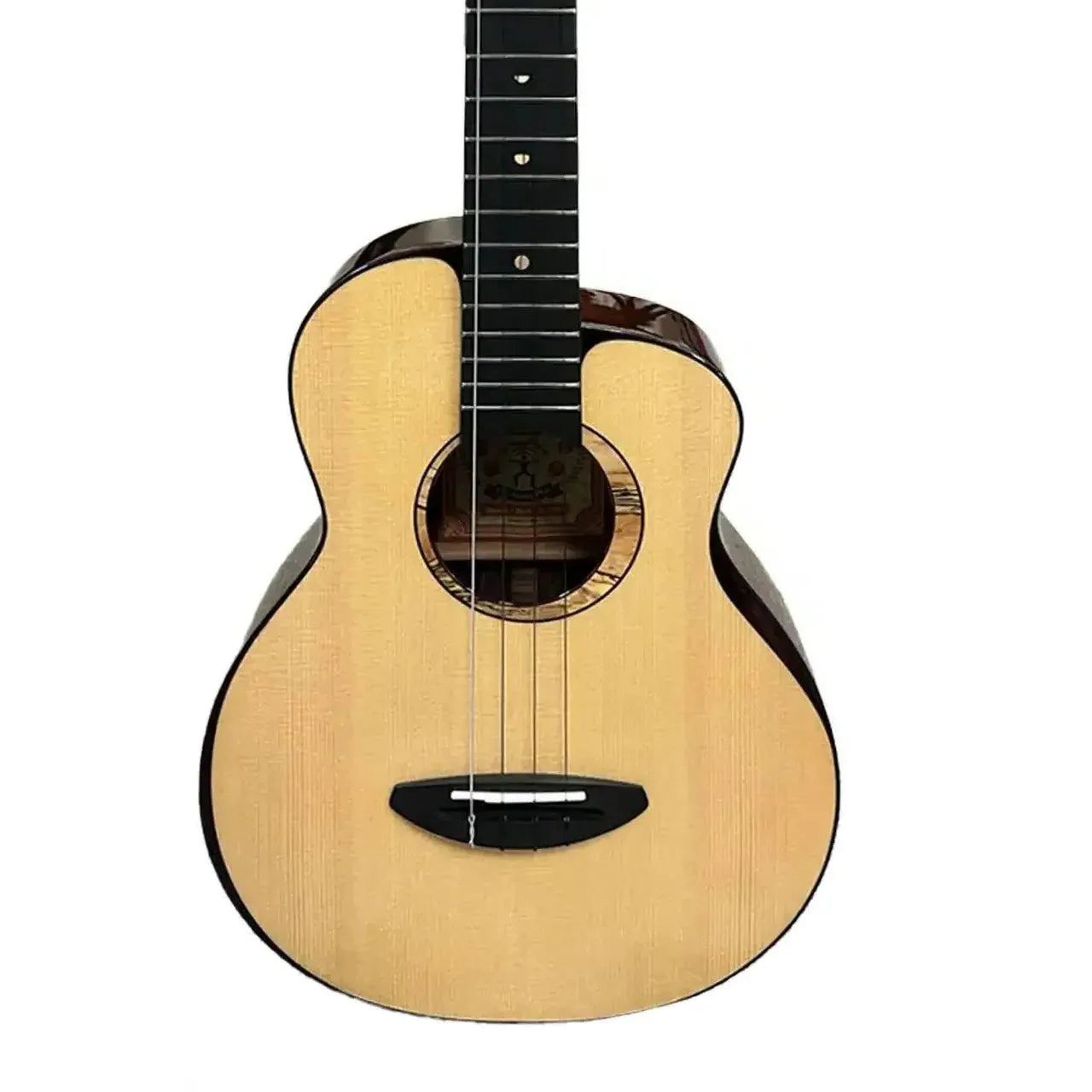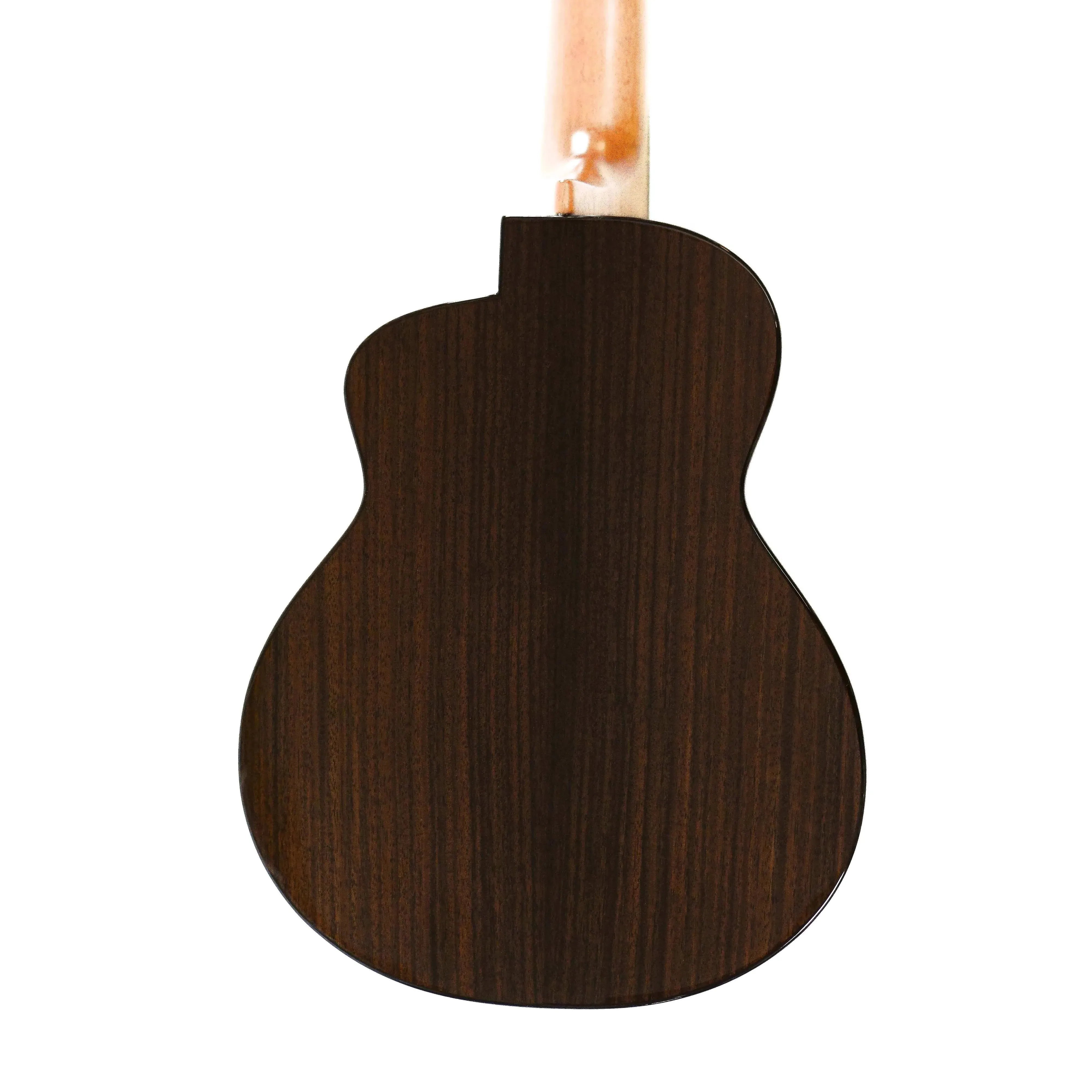
Gloss vs Satin: More Than Just Looks
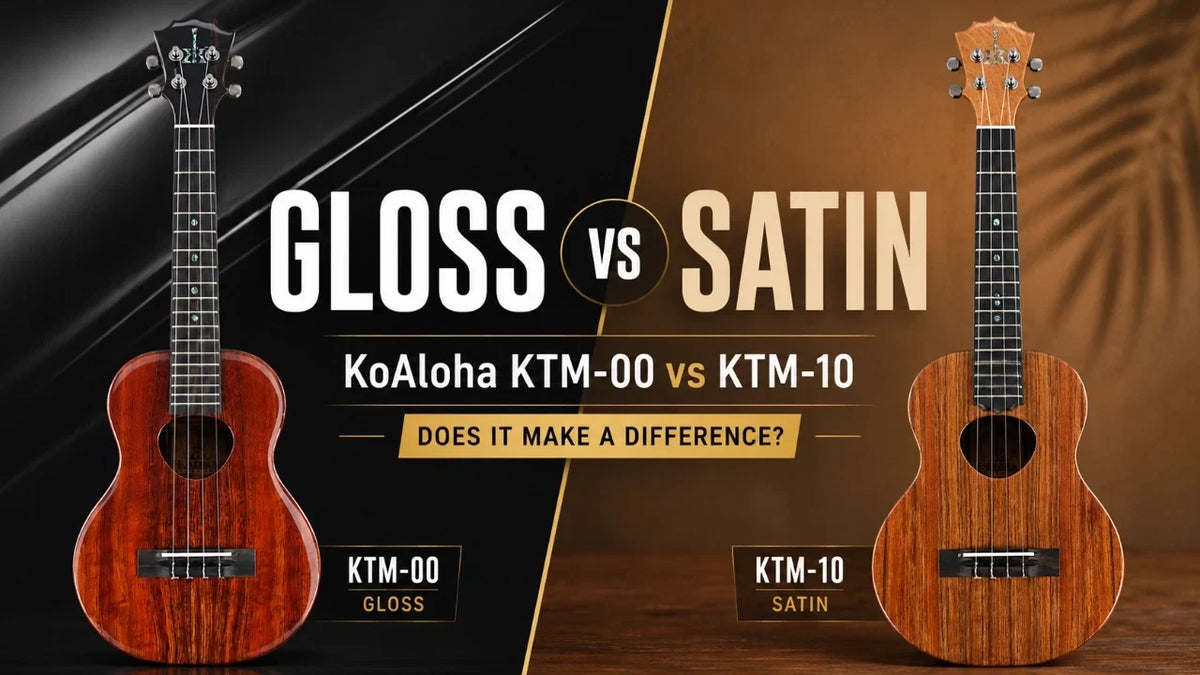
Gloss vs satin ukulele finish is one of those choices that can seem purely cosmetic at first. However, when comparing two closely related instruments like the KoAloha KTM-00 and KTM-10, the finish can influence how the ukulele feels, looks, and responds in your hands.
Meet the Two KoAloha Tenors
Both ukuleles are made in Hawaii and feature solid Hawaiian koa bodies, ebony fretboards and bridges, TUSQ nuts and saddles, and KoAloha’s patented Musubi soundhole.
Still, several details separate these models. Most noticeably, the KTM-00 uses a high-gloss finish, while the KTM-10 features a satin lacquer finish.
KoAloha KTM-00: The High-Gloss Option
The KoAloha KTM-00 uses solid Hawaiian koa for its top, back, and sides, then adds a high-gloss finish. As a result, the koa grain has a polished, reflective appearance that gives this tenor an especially refined presentation.

Its CNC-cut mahogany neck, paua abalone fret markers, abalone headstock logo, and premium KoAloha geared tuners add even more detail. Therefore, the KTM-00 is a strong choice for players who appreciate both Hawaiian craftsmanship and a polished aesthetic.
KoAloha KTM-10: The Satin Alternative
The KoAloha KTM-10 also features an all-solid Hawaiian koa body, yet its satin lacquer creates a noticeably different look. Instead of a mirror-like shine, the softer finish gives the koa a more natural and understated appearance.

The KTM-10 also uses a CNC-cut sapele neck and KoAloha Original geared tuners. Consequently, it offers a simpler visual style while maintaining many of the features that make a Hawaiian-built KoAloha distinctive.
Gloss vs Satin Appearance
Gloss creates a smooth and highly reflective surface. Therefore, figuring, grain, and color variations in Hawaiian koa can become especially noticeable when light hits the instrument.
Satin has a softer, less reflective appearance. Although it does not produce the same shine as gloss, many players prefer the more natural look it gives the wood.
Does the Finish Change How It Feels?
Yes, although the difference comes largely down to personal preference. A gloss body feels very smooth and polished, whereas satin generally has a softer and less slick feel.

Additionally, satin can feel comfortable where your forearm rests against the body. Gloss, meanwhile, provides the smooth surface and polished feel many players associate with premium instruments.
What About the Neck?
The neck materials differ between these models as well. The KTM-00 uses mahogany, while the KTM-10 uses sapele. Therefore, not every difference between the two ukuleles should automatically be attributed to the finish.

Both necks are CNC-cut, however, helping KoAloha maintain precise dimensions and a consistent playing experience.
Can Finish Affect the Sound?
Finish can have some influence on how an acoustic instrument vibrates, particularly depending on how thickly it is applied. However, it is difficult to say that gloss automatically creates one type of tone while satin creates another.
Because the KTM-00 and KTM-10 also differ in neck material and some hardware, any tonal differences should be considered part of the complete instrument rather than the finish alone.

What Both Ukuleles Have in Common
Despite their different finishes, these KoAloha tenors share many important features. Therefore, whichever model you prefer, you are still getting many of the same core materials, dimensions, and signature KoAloha details.
- Solid Hawaiian koa top, back, and sides
- Ebony fretboard and bridge
- TUSQ nut and saddle
- KoAloha Musubi soundhole
- KoAloha fluorocarbon strings
- 17.25-inch scale length
- 20 frets
- 1.5-inch nut width
- G-C-E-A tuning with an unwound low G
- KoAloha lifetime warranty
Which Finish Is Easier to Maintain?
Gloss surfaces tend to show fingerprints, smudges, and fine marks more easily because of their reflective surface. As a result, players who like their ukulele looking spotless may find themselves wiping down the KTM-00 more often.

Satin generally hides fingerprints better. However, areas that receive frequent contact can gradually develop shinier spots over time, especially where your arm rests against the body.
Why Choose the KTM-00?
The KTM-00 makes sense if you want KoAloha craftsmanship with a more polished presentation. In particular, the high-gloss koa, abalone logo, paua markers, and premium tuners give it extra visual detail.

Consider the KTM-00 if you prefer:
- A shiny, premium appearance
- Highly visible koa figuring
- Mahogany neck construction
- Abalone and paua appointments
- Premium KoAloha geared tuners
Why Choose the KTM-10?
The KTM-10 is an excellent choice for players who prefer a more natural-looking instrument. Its satin lacquer reduces reflections and gives the Hawaiian koa a warm, understated appearance.

Consider the KTM-10 if you prefer:
- A smooth satin feel
- Less visible fingerprints
- A natural koa appearance
- Sapele neck construction
- A simpler overall aesthetic
So, Does Gloss vs Satin Really Matter?
Yes, but perhaps not in the way many players expect. The biggest differences are in appearance, feel, and maintenance rather than one finish automatically being better than the other.
Ultimately, the KTM-00 delivers the shine and visual detail of a high-gloss instrument, while the KTM-10 keeps things more natural with satin lacquer. Both share the core KoAloha craftsmanship that makes either one a compelling tenor ukulele.
See Available Ukuleles at Terry Carter Music Store
Master the Ukulele at Uke Like The Pros
Master the Guitar at Rock Like The Pros